recipe
Tapioca de Queijo: Brazilian Cheese Tapioca
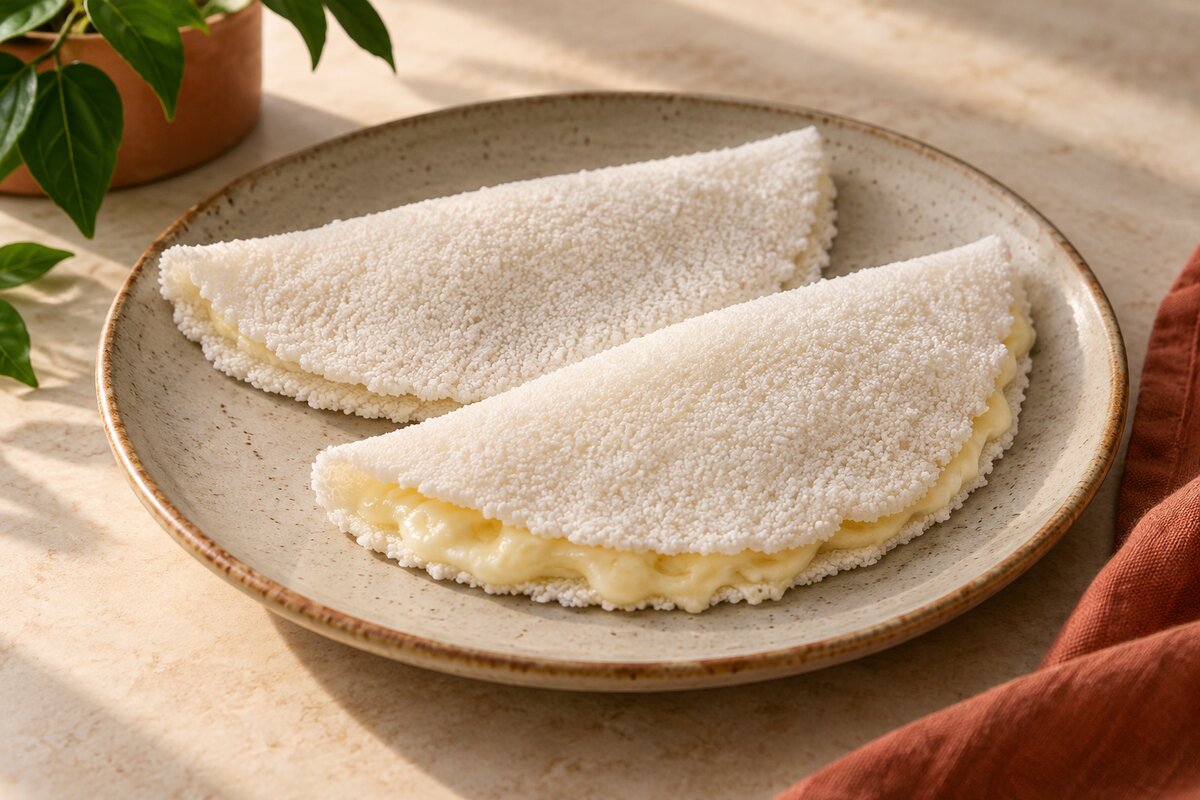
A thin, white tapioca wrap folded around melted cheese. Start with ready-hydrated goma and cook one at a time in a dry skillet.
4 small tapiocas (estimated)
Ingredients and method
4 small tapiocas (estimated)
Planning estimate: 20–30 min · Moderate.
Timing guide: Includes sifting the goma and cooking four wraps separately. Eat each while the cheese is warm.
Method
- Check the package: the ingredient must be damp, ready-hydrated goma, not dry starch or pearls. Break up any lumps and press it through a medium-mesh sieve into a bowl. Mix in the optional salt.
- Use a dry 8-inch nonstick skillet. Off the heat, sift or sprinkle about 1/2 cup goma evenly over the base, making a continuous layer about 2–3 mm thick. Cover small holes with a little more goma; do not add oil or water to the pan.
- Set over medium-low heat. Cook for roughly 1–2 minutes, until the loose grains fuse into one flexible disk and the edge releases when lifted gently with a spatula. Avoid browning it or leaving it until brittle.
- Flip carefully. Sprinkle one-quarter of the cheese over half the disk. Fold the bare half over it and cook for about 1 minute, turning once if needed, until the cheese melts. Transfer to a plate and eat warm.
- Remove the skillet from the heat briefly, wipe out dry crumbs with a folded paper towel held in tongs, and repeat with the remaining goma and cheese. Adjust the heat down if later tapiocas harden before the cheese melts.
The bag matters more than the name
Brazilian tapioca here means a pan-cooked wrap made from hydrated cassava starch. US tapioca flour is usually dry starch and cannot simply be poured into the skillet in its place. Tapioca pearls and farinha de mandioca also will not work. Buy the ready-hydrated product for this method.
Aim for flexible, not crisp
The damp granules bind as they warm. A very thick layer can stay crumbly inside; prolonged cooking makes a thin one leathery. Low-moisture mozzarella melts readily without flooding the wrap. Cook one first and use its texture to adjust the heat.
Serve straight from the pan
These are best freshly cooked. Keep the unused hydrated goma refrigerated according to its package instructions and do not assume it stores like dry flour. Contains milk from the cheese; check the goma package for your own allergy requirements.