recipe
Bolo de Cenoura: Brazilian blender carrot cake
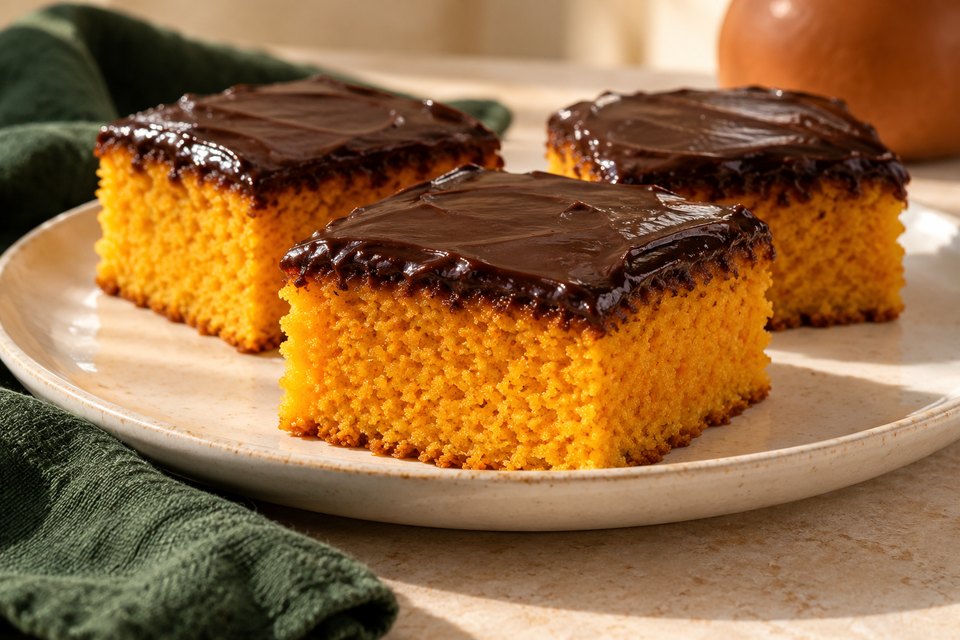
A Brazilian carrot sheet cake with smooth orange crumb and a thin cocoa glaze. Weighed carrots, a standard 9-by-13-inch pan and clear doneness cues.
Plus final cooling before cutting.
One 9-by-13-inch sheet cake, cut into 12 squares
Ingredients and method
One 9-by-13-inch sheet cake, cut into 12 squares
Planning estimate: 65–85 min · Moderate. Plus final cooling before cutting.
Timing guide: Allow about 15–20 minutes for preparation. Check the cake from 35 minutes, then give it the 15-minute pan rest before glazing. Make the glaze during that rest; let the finished cake cool enough to cut.
Method
- Heat the oven to 350°F (180°C). Butter and flour a 9-by-13-inch metal baking pan at least 2 inches deep. Whisk the flour, baking powder and salt together in a large bowl.
- Blend the carrots, eggs, oil and cake sugar until the carrot pieces disappear and the mixture is smooth. Stop and scrape down the blender with the power off if needed. Work within its capacity and running-time limits.
- Pour the carrot mixture into the flour mixture and fold gently until no dry flour remains. Transfer to the pan and level the surface. Do not taste raw batter.
- Bake on the center rack. Begin checking at about 35 minutes; continue until the center springs back lightly and a toothpick comes out without wet batter. This wide sheet pan makes a shallower cake than a smaller, deeper pan and can finish sooner, so use the doneness cues. Let stand on a rack for about 15 minutes.
- For the glaze, whisk its sugar, cocoa, milk and butter together in a small saucepan. Bring to a boil over medium heat while whisking, then keep it bubbling and stirring for about 3–5 minutes until slightly thickened. Handle carefully; hot sugar can burn.
- Spread the warm glaze thinly over the still-warm cake. Let the cake and topping cool together before cutting into 12 squares. The glaze should become less glossy and firmer as it cools.
Weigh the carrots after peeling
Carrots vary too much in size for “three carrots” to be a dependable measure. Weigh 360 g after peeling and trimming, then blend them raw. The cake should have an evenly colored crumb; visible shreds suggest the liquid mixture needed more blending.
Keep the flour out of the blender. Mix it in by hand after the carrot base is smooth. Use plain all-purpose flour and baking powder, not self-rising flour or baking soda. Spoon-and-level flour measurements follow a 120 g-per-cup convention; densely scooped cups can contain considerably more.
A US sheet pan and a separate cocoa glaze
The cake formula starts from Panelinha’s four-egg version. A 9-by-13-inch pan is wider than its 30-by-20-cm pan, so this adaptation makes a lower sheet cake. Its baking time is an estimate; a wet center needs more time even if the edges are golden.
The topping uses Aline Shaw’s separate milk, sugar, cocoa and butter glaze, which avoids the ambiguity of Brazilian 50% chocolate powder in a US pantry. It makes a thin topping, not a thick frosting layer. Add no cream cheese, coconut, raisins or nuts to this particular version.
Cooling, keeping and allergens
Contains wheat, eggs and milk. Bake before tasting: raw flour and eggs can carry harmful germs. Wash the blender, bowl, hands and work surfaces after handling the uncooked batter.
Keep the cooled cake covered. Refrigerate and use within 3–4 days as a conservative household storage plan. The glaze may soften in the refrigerator and the crumb may become firmer; bring out only the portions you plan to serve.