recipe
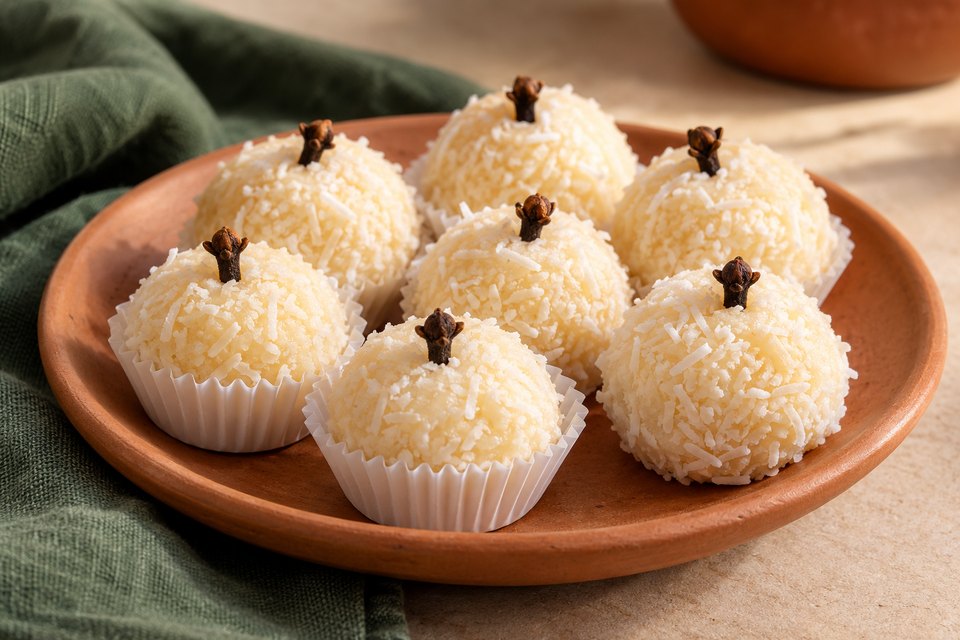
Beijinho: Brazilian coconut sweets
Roll coconut beijinhos with sweetened condensed milk and unsweetened dried coconut. Includes clear coconut labels, cooling cues and optional clove decoration.
Plus cooling and chilling until firm.
Approximately 20–25 small beijinhos; size-dependent estimate
Plan ahead: Cook the mixture ahead of shaping and refrigerate until completely cool and firm. Keep the finished sweets chilled until serving.
Ingredients and method
Approximately 20–25 small beijinhos; size-dependent estimate
Planning estimate: 35–50 min · Moderate. Plus cooling and chilling until firm.
Plan ahead: Cook the mixture ahead of shaping and refrigerate until completely cool and firm. Keep the finished sweets chilled until serving.
Timing guide: The stovetop stage takes roughly 10–20 minutes. Allow another 20–30 minutes for preparation, shaping and coating; completely cool and chill the mixture before rolling. The cooling wait is additional.
Method
- Lightly butter a heat-safe plate. Stir the condensed milk, 100 g coconut and tablespoon of butter together in a heavy saucepan.
- Cook over medium-low heat, scraping the bottom and corners continuously, until the mixture moves as a thick mass. A spatula drawn through it should leave a trail that closes slowly. Start watching closely after 10 minutes; some pans and heat settings take nearer 20.
- Spread on the prepared plate. Once the steam has subsided, refrigerate until completely cool and firm enough to shape. Keep time at room temperature under 2 hours, or 1 hour if the room is above 90°F.
- Pour the coating coconut into a shallow bowl. With lightly buttered clean hands, shape small spoonfuls into balls, then roll each in coconut.
- Arrange in small candy cups or on a serving plate. If using cloves, add one to each sweet and tell everyone to remove it before eating; omit them for children or anyone unfamiliar with the decoration. Keep the sweets refrigerated until shortly before serving.
Which coconut belongs in beijinho?
Choose unsweetened dried coconut, finely grated or shredded. Wide toasted flakes give a different texture, and sweetened baking coconut contributes extra sugar and moisture. Coconut flour is a different, much more absorbent ingredient. The weight is the reliable measure when comparing bags with different shred sizes.
This is a coconut-forward version with 100 g coconut in the mixture. Panelinha uses less coconut in the center and adds milk, which makes a different starting mixture. Do not add that milk to this formula while keeping the same cooking expectations.
If the sweets will not hold their shape
First let the mixture cool completely. Warm beijinho sticks readily and is difficult to judge. If the cold mixture still slumps, give the uncoated mixture a little more time in the pan, then cool again. Do not try to fix it by burying it in coating coconut.
Use only a light film of butter on your hands. Large portions are harder to roll neatly; a small spoon makes it easier to keep a consistent size. Smaller portions yield more sweets; use the pan-release and cooling cues rather than the clock alone.
Storage and allergens
Contains milk and coconut. Sweetened condensed milk is required; evaporated milk and coconut milk are not direct substitutes. A dairy-free version needs its own formula.
Keep covered at 40°F or below and plan to eat within 3–4 days, using general leftover guidance conservatively. Take out small batches for serving, keeping total unrefrigerated time below 2 hours, or 1 hour above 90°F. A dry coconut coating does not establish shelf stability.